Starting again after the war
After operations were suspended in 1939, the club reformed six and a half years later. Ground was rented from Sale Corporation on the site that became today's home, then known as Barracks Lane.
 Ashton-on-Mersey
Sports Club
Book the Function Room
Ashton-on-Mersey
Sports Club
Book the Function Room
Club History
Ashton-on-Mersey Sports Club brings together generations of local sport, volunteering and community life at Banky Lane. This page tells the fuller story behind the short timeline on the homepage.
1930
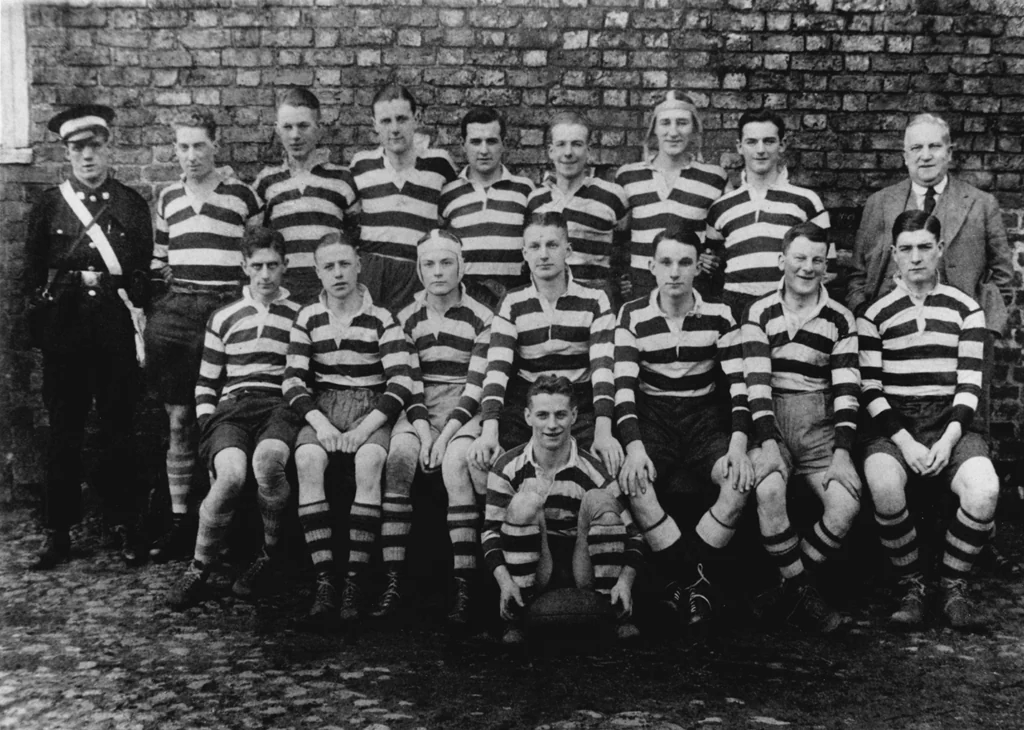
The original Ashton-on-Mersey rugby club was formed in 1930 by local players who wanted somewhere to play, compete and build friendships. Early meetings were held around Ashton Village, and the first teams used nearby fields and makeshift changing spaces.
The details are part of local sporting folklore: farm buildings, tin baths, borrowed land, hard graft and a lot of volunteer effort. That spirit still matters because it shaped the club culture that followed.
Through the 1930s the club moved between local grounds, including Kenilworth Road and Glebelands Road, while fixtures grew and more teams began to represent Ashton-on-Mersey. The Second World War paused the club's progress, but it reformed in 1946 with little money, no permanent clubhouse and a determination to start again.
Rugby Heritage
The rugby story is full of practical graft: finding pitches, building changing rooms, raising funds and turning a patch of local ground into a home for generations of players.
After operations were suspended in 1939, the club reformed six and a half years later. Ground was rented from Sale Corporation on the site that became today's home, then known as Barracks Lane.
The rugby club badge was adopted in 1954, using maroon and white, the Trafford family unicorn and three wheat sheaves representing Cheshire.
Mains water, electricity and a licence arrived in the mid-1950s, a major step forward after years of hand-pumped water, basic changing spaces and volunteer-built facilities.
A new clubhouse was built in October 1967, when Ashton were fielding seven teams each week. The present clubhouse later grew around that footprint.
Ashton became known for starting junior rugby locally in 1972, giving young players a pathway into the game and strengthening the family feel of the club.
The club reached North West One in 1994, one of the strongest playing achievements in its rugby history.
A major landfill project completed in 2001 helped create raised pitches that became some of the best in the local area.
After difficult seasons in the early 2000s, the senior squads rebuilt, with the 1st XV winning the Cheshire Plate in 2009 and earning promotion in 2009/10.
1993-Present
In 1993, Tony Lowe started a football coaching centre at Wellfield Junior School with a simple idea: football for all abilities. That grew into Wellfield Juniors and, in 1997, Ashton-on-Mersey Junior Football Club.
The football section kept growing through local schools, volunteers, families and coaches. Girls' football relaunched in 2019 and became a major part of the club's future, helping more players find a team and a place to belong.
Growth was not always straightforward. The club came close to securing a permanent home in 2007 after major investment into a local site, but a later dispute left the football club without that base and at risk. The response was typical of Ashton-on-Mersey: regroup, rebuild and keep giving young players somewhere to play.
That story is still moving forward. In 2025, Ashton-on-Mersey Football Club was recognised as Cheshire FA Club of the Year, a fitting reflection of the volunteers, coaches, players and families who continue to build the club.
Football Story
The football section developed through school links, inclusive coaching, new teams and a strong belief that local players should be able to develop close to home.
Tony Lowe began a coaching centre at Wellfield Junior School, focused on giving children of all abilities a positive football environment.
The centre grew quickly, building a reputation for enthusiasm, quality coaching and an inclusive approach.
Wellfield Juniors became Ashton-on-Mersey JFC, giving the football club a name rooted directly in the local community.
A new facility looked possible after significant Football Foundation investment, but the club later found itself without a home after a dispute over the site.
From 2014 onwards, the club recovered strongly, expanding across multiple venues and growing its youth sections.
The girls' section relaunched for good, becoming central to the club's future and widening opportunities for local players.

The football club's ongoing work across coaching, inclusion and community football was recognised with Cheshire FA's Club of the Year award.
Milestones
The original local rugby club is formed and starts building a sporting community.
The rugby club badge is adopted, carrying local symbols and club pride.
A new clubhouse is built on the current site, giving members a stronger home base.
Junior rugby begins, continuing the tradition of giving young people somewhere to play.
A grassroots football coaching centre begins at Wellfield Junior School.
Wellfield Juniors becomes Ashton-on-Mersey Junior Football Club.
The girls' section relaunches and becomes a major part of the club's future.
Ashton-on-Mersey Sports Club forms through the merger of Ashton on Mersey RUFC and Ashton on Mersey FC, bringing sport, fitness, events and social connection together.
Ashton-on-Mersey Football Club is named Cheshire FA Club of the Year.
Football, fitness, events and function room hire now sit together as one community club at Banky Lane.
Banky Lane Today
The club's history matters because it gives today a job to do: better facilities, more activity, more events and more reasons for local people to get involved.